Wednesday, 16 December 2020

Wiley Coyote

As a kid, I often went to the movies on Saturday afternoons. For 25 cents we could see back-to-back cowboy or war movies and there were always several Looney Tunes cartoons in between as well. Wiley Coyote was a recurrent character in these cartoons. I would laugh at his failed schemes to capture and eat the Road Runner, but I also felt rather sorry for him. Someone who put so much energy and creativity into accomplishing a goal should have been rewarded at least occasionally. A part of me was rooting for him to succeed while the other part knew full well that he would never do so.

I remember teaching a grade 12 religious education class. There were over 30 students in that classroom. They were bright kids and serious about their schoolwork, but many of them were in the religious education class mainly because it was a requirement for graduation. I could seldom get the class engaged in a discussion or see sparks of interest in the subject matter.

One day, one young lady seated at the very back of the classroom, raised her hand to make a comment. I don’t recall the topic we were involved in at the time, but I do vividly recall her comment. She said, “God has his opinion, and I have mine.” In cartoons, total dismay is often shown by having the jaw of one of the characters drop suddenly all the way down to the floor. That would have been a good rendering for what I felt inside at that moment. I did not respond to the young lady. What response could one have given to such a statement? I felt like Wiley at the end of the thousandth failed attempt to reach his goal, or in my case, to reach the students.

The Wiley Coyote syndrome of hoping beyond hope is still in me though: I still believe that even where my schemes and creativity fell short of producing results, God was and is still at work. I still pray for all the students I ever taught. The Road Runner does not stand a chance.

Tuesday, 15 December 2020

The Gift-Wrapping Matters Little

Because he had Alzheimer’s, Louis would repeat the same stories over and over again. After two and a half years of our weekly get-together, I could have told those stories myself without missing a detail. The strange thing is that I do not recall ever being annoyed at the repetitions. I think it is because I always felt that the stories he was sharing with me were more than tidbits of information about himself, members of his family, news items, or miscellaneous facts that he had stored in his memory over time. Whenever he spoke to me and regardless of the topic of conversation, I understood that he was also trying to share a part of himself. He was giving me of himself through his stories and that gift of self was made anew no matter how many times he repeated them. The friendship that developed between us certainly never grew old or boring. 

I guess that is how friendships are always built: one small gifting of self at a time. The gift-wrapping matters little.

Monday, 14 December 2020

Un souvenir de famille II

 Voici l'ange qui, grâce à un commentaire de notre petite fille Katherine, est devenu "un souvenir de famille" en décembre 2019. 

Here is the angel that became "a family memory" last december because of a comment made by our granddaughter Katherine.


Sunday, 13 December 2020

L'oiseau dans une cage en verre: un conte

Voici un petit conte inspiré de paroles de Sainte Élisabeth de la Trinité.

Un oiseau, n’ayant pas encore appris à voler, était enfermé dans une cage en verre sans issue sauf par le haut. Tant que l’oiseau cherchait à sortir de la cage par les côtés, il se butait aux parois de verre avec ses ailes, son bec et ses griffes qui étaient beaucoup trop faibles pour percer le verre. Ces tentatives étaient futiles et l’oiseau risquait de se blesser et de finalement désespérer de sortir de sa prison.

Un jour, alors que l’oiseau venait de déployer ses ailes, un grand coup de vent pénétra dans sa cage et le souleva. L’oiseau appris ainsi à se servir de la fragilité de ses ailes pour voler.

Pour sortir de mes enfermements, il en va de même pour moi : je dois offrir à Dieu mes moyens trop faibles et, dans des mouvements d’amour, ces petits coups d’ailes aussi faibles qu’ils puissent être, me laisser soulever par le souffle de l’Esprit. Je dois, moi aussi, apprendre à voler.

Saturday, 12 December 2020

Portraits

Kent, my son in law, is an accomplished artist. I love what he does. He uses coloured pencils to produce the most amazing drawings. His technique involves applying small strokes of pencils to obtain the effect desired, and that effect is quite remarkable. I will let you judge that by yourself: https://www.facebook.com/kentartistportraits/

I am exceptionally good at drawing stickmen, but that is the extent of my talents with pencils. On the other hand, I like to use words and images. Instead of coloured pencils and paper, the tools I work with are the written word and insights gleaned from a kaleidoscope of experiences over a 71-year span.

Kent and I do have something in common. Kent is mostly a portrait artist. He has produced a large number of portraits of various people and fictional characters. I also am a portrait artist, but I am working on a single portrait and I do not yet know how the finished product will look like. Each of my stories is but a small stroke in that overall process. I sense that the portrait I am attempting to draw in everything I write is always the same one, that of the face of Love in my life. We are all called upon to do exactly that: draw the face of Love in our own lives using the talents, the tools and the fabric of every day living that we have been gifted with. 

Parents proudly display drawings made by their children no matter how rudimentary and awkward these are. I think God does the same thing with our attempts to draw his face!

Friday, 11 December 2020

This Hurts Me More Than It Hurts You

Jenny, Sylvia, and Shauna (fictitious names real students) had been at it for a while before I intervened. They had been pecking at each other all day and I could see the occasional feather flying. I knew I had to do something before World War III broke out.

I got a baseball bat from the equipment room and called the three young ladies outside the classroom, bat in hand. I said to them: " It really hurts me to see you girls fighting like this. In fact, it hurts me so much that I think it would hurt me less if you hit me with this bat." I then presented the bat to them and continued: "Here, I'll make a deal with you. Take this bat and hit me with it as hard as you can. That way you will get rid of the anger that makes you fight like that. I think that would hurt me much less than your fighting does."

Fortunately for me, all of the girls simply grinned and refused the extended bat. And yes, they did stop fighting. The peace between them was in fact long-lasting. I do not recall any further serious skermishes between them that day or even for the rest of school year.

Thursday, 10 December 2020

Le grand silence du dedans

Dans la conversation après le souper chez ma fille samedi dernier, nous parlions des choses qui nous empêchent de concentrer sur le travail à faire. Katherine et son petit frère Victor font l’école virtuelle à la maison et, même s’ils sont dans deux pièces différentes, ils peuvent parfois entendre ce qui se passe dans l’autre « classe ». Katherine nous a dit qu’en plus d’un bouton qui permet de monter le volume sur un ordinateur, il serait bon d’avoir un bouton qui « monte le silence ».

Ma fille Marie-Claude a fait du pouce sur cette remarque en disant, « Grand-papa aimerait avoir un bouton comme celui-là. Il aime se sauver pour aller dans des monastères ou il y a beaucoup de silence. »

Je ne sais pas si un « bouton qui monte le silence » me serait si utile que cela. Il est vrai que j’aime les temps de silence et parfois que ces temps soient prolongés, mais le genre de silence dont j’ai avant tout soif est celui qui se trouve dans les profondeurs de mon cœur: là où il y a une Présence et une « Voix » qui cherche à se faire entendre.

Au lieu d’un « bouton qui monte le silence », c’est donc d’un submersible dont j’aurais besoin, pour descendre aussi loin que possible dans ce que Sainte Élisabeth de la Trinité appelait « le grand silence du dedans ». Avec un submersible de ce genre, je pourrais pénétrer dans les recoins les plus reculés de mon cœur pour m’y installer quelques instants et prier: « Parle Seigneur, ton serviteur écoute. » 1 Samuel 3,10

Wednesday, 9 December 2020

Au centuple

 Jésus semble avoir eu un penchant pour les mathématiques, en particulier pour les multiplications. Il suffit de lire les Évangiles pour s’en convaincre. Il nous invite à être bonne terre pour laisser sa Parole produire du « trente, soixante, cent pour un. » Il nous encourage à doubler les talents que nous avons reçus. Quand Pierre laisse entendre qu’il serait peut-être prêt à pardonner jusqu’à sept fois, Jésus lui dit de multiplier cela par soixante-dix. Il multiplie deux poissons et cinq petits pains – un bien pauvre panier de provision – pour satisfaire la faim d’une foule énorme et pour remplir douze gros paniers de restes.

Je crois que Jésus n’a pas perdu cette passion pour les multiplications. Jeune enseignant de cours d’enseignement religieux dans une école secondaire, je me souviens de ce matin où je montrais une image sainte à mes étudiants. D’un côté on pouvait voir les traits de la face de Jésus du suaire de Turin. De l’autre côté il y avait un de mes passages bibliques préférés, celui que nous lisons dans la première lecture de la célébration eucharistique du jour de l’an :

« Que le Seigneur vous bénisse et vous protège ! Que le Seigneur fasse briller sur vous son visage et qu’il ait pitié de vous ! » (Nombre 6, 25-26)

Après le cours, une de mes étudiantes est venu me voir pour me demander si elle pouvait avoir cette carte. Je me préparais à lui dire que je n’avais qu’un seul exemplaire et que je ne pouvais donc pas la lui donner. Mais les paroles de Jésus me sont remontées en mémoire : ce que vous donnez en mon Nom vous sera rendu au centuple. Je lui ai donc donné la carte.

En fin d’avant-midi, je devais passer au secrétariat de ma paroisse pour une raison qui m’échappe maintenant. En entrant dans le bureau, j’ai remarqué une boite par terre qui était pleine de cartes identiques à celle que j’avais donnée plus tôt dans la journée. J’ai demandé à la secrétaire si je pouvais en avoir une. Elle m’a répondu, « O, vous pouvez prendre toute la boite. Quelqu’un est venu nous la remettre ce matin et je ne sais vraiment pas quoi en faire ! » Je n’en croyais pas mes oreilles. J’étais stupéfait et tout ce que j’ai pu faire c’est de me pencher pour retirer de la boite une grosse poignée de cartes. J’ai distribué ces cartes à tous mes étudiants – j’en avais près de 180 cette année-là – et il m’est resté quelques cartes en plus.

Oui, Jésus aime multiplier, surtout quand nous acceptons de lui donner le peu que nous avons.

Tuesday, 8 December 2020

Prière devant un feu

Pour moi, prier est comme s’asseoir paisiblement devant un feu de foyer ou un feu de camp pour le contempler en silence. Jésus est assis à côté de moi et fait la même chose. C’est lui qui a allumé le feu. Il l’alimente de temps en temps pour qu’il ne s’éteigne pas et souffle dessus pour que la flamme soit belle. Il ne se sert pas de bois pour nourrir le feu. Il s’offre lui-même à brûler de sorte qu’il n’y a pas de différence entre la flamme et lui : il est ce feu.

De temps en temps, il m’invite à alimenter le feu à mon tour. Souvent, il me laisse choisir ce que je veux y déposer. J'ai tendance à choisir de petites choses qui brûlent bien vite et ne donnent pas beaucoup de chaleur ou de lumière parce qu’elles ne valent pas grand-chose. Ce genre de feu ne brûle bien que quand il est nourri du don de soi.

Mais de plus en plus, il m’invite à faire comme lui, à donner davantage de ma personne, de ce qui fait vraiment partie de moi. J’aimerais alors faire un tri dans les bûches à offrir, ne prendre que celles qui sont belles et bien sèches. Mais toutes mes bûches sont plus ou moins détrempées et sentent le moisi. J’hésite à les offrir. Mais Jésus attend patiemment. Finalement, j’en offre une ou deux parmi les plus petites, celles qui ne prendront pas trop de temps à sécher et ne feront pas trop de boucane. Je les place dans les flammes qui les accueillent avidement comme si elles étaient de grosses bûches de bouleau bien sèches. Jésus regarde le feu et il sourit. Ce sourire me réchauffe le cœur. J'en suis certain, son regard plein de tendresse me donnera éventuellement le goût et le courage d’offrir mes bûches les plus grosses.

Monday, 7 December 2020

Twigs

 Written in 1999:

I woke up hours before dawn. Anxious thoughts immediately began whirling around in my head. The preceding few weeks at school had been very stressful. As I lay there in bed, I could not let go of some of those things that sometimes risk taking the joy out of teaching: a pointed remark made by a parent; students testing to see how hard they could push the buttons before all of proverbial hell broke loose; the pile of essays that should have been marked two weeks earlier but which was still sitting on my desk buried under a mound of other things to do; an impatient exchange of words between overworked fellow teachers...

   When negative feelings threaten to overwhelm me, as they did that morning, I try to focus on something that brings me a bit of peace or joy. Searching for a small oasis of rest during those sleepless pre-dawn hours, I remembered an incident which had taken place a few weeks earlier.

   It was a beautiful, crisp, sunny Saturday in early Spring, and I was babysitting my 5-year-old grandson Daniel. The cherry trees and apple trees beside our house had just been pruned leaving branches and twigs strewn all over our driveway and yard. I decided that it was time for some cleaning up. I knew, however, that Daniel would not be able to stand still very long if I did not somehow keep him busy. I therefore asked him to help me pick up twigs. I did not expect much help from him, but I hoped he would be distracted long enough to allow me to get the job done.

   Daniel, I soon found out, had his own agenda. He assailed me with a constant barrage of comments and questions on an amazing array of miscellaneous topics. Every twig he picked seemed to trigger a desire to share his thoughts. He talked to me about the motion of the planets around the sun, about his personal trials and tribulations in kindergarten, and even about the feeding habits of his goldfish. I sometimes stopped to listen. Most often, I just nodded and more or less ignored him. I had things to do and this incessant chatter was slowing me down.

   Thus, things would have stood, and the morning would have passed, just another moment in a succession of moments, but for what happened next. For the hundredth time since we had started, Daniel paused with a single twig in his tiny hand, looked at me and half asked, half stated: "I'm a good helper, aren't I?" In response to his question, I did what any good grandparent would do; I stretched the truth somewhat and told him that indeed he was a good little worker. For a full two minutes after that he was uncharacteristically quiet. Then he turned to me and added with the conviction and self-assurance that only a small child can have: "You know grandpapa, we were made to help each other."

   As I lay awake thinking about this precious bit of wisdom from my grandson, my imagination started wandering. It may have been because I was on the verge of falling back to sleep that I was not at all surprised to find myself in our front yard where Jesus and his twelve apostles were picking twigs. Even the most unlikely happening in a dream does not surprise the dreamer. I found the scene quite natural. After all, the job needed to be done.

    Even when I came closer to them, they paid no attention to me. I could hear what they were saying to each other.

   "I'm the best twig picker anywhere" Andrew boldly insisted.

   "I have 78 twigs. How many do you have?" asked Matthew.

   "I've got more than you" responded Andrew with a satisfied smirk on his face.

   "I'm the fastest twig picker around." Philip boasted as he ran from twig to twig.

   And James muttered impatiently, "Your picking the wrong twigs. That's why our fires never burns properly."

   Before James had finished, Thomas added, "You don't know the first thing about picking twigs. Look at me. I'll show you how it's done"

   "Anyone who is not serious about picking twigs, should not be here." said Simon as he turned his back on the others.

   "If I were head twig picker" said Judas under his breath, "I certainly wouldn't do it that way. We'll never get a good stack of twigs using that approach."

   Peter, who could no longer stand the constant bickering, shouted, "Would you guys stop talking and fooling around. Can't you see I'm trying to work? I'm the only one who does any real twig picking around here!"

Jesus, who was standing quietly by himself a little distance away from them, listened to what they were saying, and he was very sad. He bent down and slowly started to write on the ground with the twig he was holding in his hand. Then he looked at the apostles and gently said to them, "Guys, you're missing the point. The twigs are not that important. What is important is picking them together. Don't you know that we were made to help each other? If you're very fast at picking twigs, then help the one who is very slow. If you know a better way of picking twigs, share your knowledge with the others. If you're stronger and can lift a larger stack of twigs, help the one who is weaker carry his load. And you Peter, don't be so proud as to think that you can do it all by yourself. Let the others give you a hand. They were made to help you. Be humble enough to let them serve you when you need help. Only then can they be one with you. Only then can you be one with me."

   These were, of course, but fanciful images and voices created by an overactive imagination on that early morn. But I could not help but think afterwards that Jesus would have enjoyed picking twigs with my grandson. Daniel was still too young to be an efficient worker, but he was certainly already a very good helper. He helped me remember that what really mattered was not so much getting the job of learning and teaching done, but that it is the loving in the doing that makes all the difference in the world.

Sunday, 6 December 2020

Bain de prières

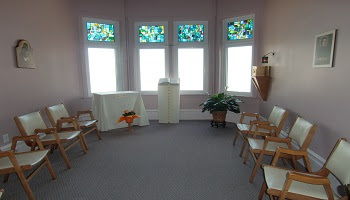
Quand je vivais à Papineauville j’allais souvent passer quelques jours à une maison de prière, le Carrefour de prière Bethel, qui était maintenue par les sœurs de la Charité. Dans cette maison, il y avait une petite chapelle au deuxième étage que j’aimais beaucoup. Quand je traversais le seuil de la porte de cette chapelle, je sentais que je pénétrais dans une enveloppe de sérénité, de paix profonde. La sensation était si forte qu’elle était physique aussi bien qu’intérieure. Pendant des années, les religieuses qui s’occupaient de la maison et des milliers de retraitants avaient prié dans cette chapelle. Cette prière s’était imprégnée dans les murs même de ce petit enclos sacré.

Il n’y a pas que les bains tourbillons qui sont thérapeutiques. Les bains de prières, celle des autres aussi bien que les miennes, le sont aussi.

Saturday, 5 December 2020

Donner et recevoir

 Jean était un médecin de famille à la retraite. Il profitait de celle-ci pour accomplir un rêve de longue date : celui d’étudier en théologie. Nous nous sommes retrouvés dans les mêmes cours de théologie et nous sommes vite devenus amis.

J’ai reconnu en lui un homme au grand cœur. Il était un médecin de la « vieille école », l’un de ceux qui prenait le temps d’aller visiter ses patients à la maison quand c’était nécessaire. Sa profession était pour lui une vocation, un appel à servir les autres.

Un soir, comme il avait été absent de ses cours pendant plus d’une semaine, je suis allé frapper à sa porte. Il avait une petite chambre sur le campus du Collège. D’une voix faible, il m’a invité à entrer. Il était dans son lit, trop malade pour se lever. Quand je me suis assis pour lui parler, il m’a expliqué que son cancer du foie avait progressé rapidement et qu’il n’en avait plus pour très longtemps.

Je voyais qu’il ne pouvait plus demeurer seul et qu’il avait besoin de soins soutenus. Il m’avait souvent parlé de ses enfants qui vivaient à Montréal et je savais qu’il avait de très bonnes relations avec eux. Je lui ai donc demandé si ses enfants étaient au courant de sa situation. Il m’a répondu qu’il ne leur en avait pas parlé parce qu’il ne voulait pas être un fardeau pour eux.

Je lui ai alors dit, « Tu as passé toute ta vie à aimer les autres et maintenant que tu en as le plus besoin, tu refuserais l’amour qu’ils pourraient te donner? »

Le lendemain, je suis retourné à sa chambre pour voir comment il se portait. Son fils était là pour le ramener chez lui. Il est décédé quelques jours plus tard entouré de sa famille. Jean avait compris une des choses les plus difficile à saisir et à accepter:  aimer ce n'est pas uniquement offrir ses richesses, mais c'est aussi offrir son indigence. 

"Si je n'avais rien à donner à Dieu, je lui donnerais ce rien." - Thérèse de Lisieux